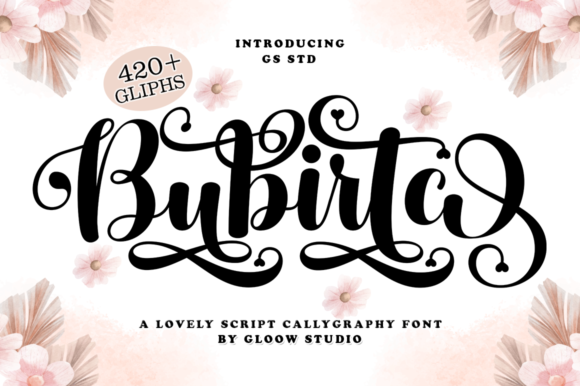
Bubirta: A Handwritten Font for Crafted Elegance
There’s a quiet magic in the moment when a design comes together. Yesterday, it happened while I was finalizing the packaging for a new candle label. I had the artwork, the colors, the layout—but the name itself, “Honey & Hearth,” felt stiff. It needed a touch of softness, a signature. That’s when I opened my font library and typed the words into Bubirta. Suddenly, the label wasn’t just a piece of graphics; it felt like a handwritten note, warm and inviting. This is the experience Bubirta brings to handmade creations.
The Heart and Character of Bubirta
Bubirta is a handwritten script font that feels both romantic and approachable. Its strokes have a genuine, flowing rhythm—there’s a lovely variation in the letterforms that avoids the mechanical uniformity of some digital scripts. It doesn’t shout; it whispers with grace. The overall mood is one of personalized elegance, perfect for projects that aim to connect on an emotional level. When you’re selling something handmade, that connection is everything. Bubirta helps establish it immediately through its visual personality.
In practical testing, its charm translates beautifully across mediums. On a printed wedding invitation mockup, the font gave the names a celebratory, almost joyous lift. On a simple kraft paper tag for a linen apron, the product name gained a boutique, artisanal quality. This versatility is key for makers who work across different products but want to maintain a cohesive brand feeling.
Bringing Bubirta to Life in Your Shop
The true test of any creative font is how it performs on real shop materials. Here’s where Bubirta has proven its worth in my own projects.
For Physical Products & Packaging
Bubirta excels as a display font on items where you want to highlight a name, a title, or a short, evocative phrase.
- Candle Labels & Jar Wraps: As with my “Honey & Hearth” example, it transforms a simple scent name into something special.
- Wedding Stationery: From welcome signs to invitation names and table numbers, it injects a personalized, loving vibe.
- Boutique Product Tags: It adds a handwritten touch to tags for ceramics, textiles, or soap, elevating the perceived craftsmanship.
- Tote Bags & Apparel: For a single line of text on a bag or tee, like “Farmhouse Market” or a simple logo, it creates a stylish, wearable design.
- Signs & Wall Art: In printable wall art or physical farmhouse-style signs, a quote rendered in Bubirta feels intimate and inspirational.
Readability is excellent at the sizes typical for these applications. For cutting machines like Cricut or Silhouette, the clean, connected strokes of Bubirta translate well into cuts for stickers and vinyl, provided you’re not working at an extremely tiny scale.
For Digital Printables & Templates
For creators selling digital downloads, Bubirta is a powerful design asset.
- Planner Pages & Journal Covers: It makes section titles and cover text feel uniquely crafted.
- Greeting Card Templates: The font is ideal for the main greeting line on birthday, thank you, or holiday cards.
- Seasonal Craft Designs: Think holiday gift tags, Easter bunny signs, or autumn harvest labels—Bubirta brings a festive, handmade charm.
In mockup previews and listing images, this font helps your digital product stand out by showcasing a beautiful, applied look that customers can instantly imagine using.
Understanding Its Limits & Making Smart Pairings
Every font has its ideal role. Bubirta is a display script, and it’s best used for shorter text. I wouldn’t recommend it for:
- Long paragraphs of body text on a product brochure.
- Dense informational labels (like extensive ingredient lists or technical instructions).
- Very small text on stickers or tags where the decorative details might become lost or blur in printing.
To create balanced, professional designs, pairing Bubirta with a complementary font is essential. I’ve found it works beautifully alongside a clean, simple sans serif font. That sans serif can handle all the necessary details—pricing, descriptions, addresses, terms—while Bubirta shines as the emotional anchor for the key names and titles. This pairing ensures your design is both beautiful and functional, maintaining clarity for your customer.
A Maker's Checklist Before You Begin
If you’re considering Bubirta for your commercial craft projects, a few practical checks will ensure a smooth experience.
First, review the font files and licensing. Confirm the license covers commercial use for physical products, printables, and merchandise. Most quality fonts do, but it’s a vital step. Check the included file formats to ensure compatibility with your software (often .TTF and .OTF).
Explore the font’s features. Does it include alternates, ligatures, or swashes? These can add even more variation and personality to your designs, allowing you to customize words further. Also, verify multilingual support if your products use characters beyond basic English.
Finally, test it in your actual workflow. Create a mockup of your most common product—a label, a card, a tag. Print it at the size you intend. See how it feels, how it reads. This hands-on test is the best way to know if a font, no matter how beautiful, truly fits your maker’s hands and your brand’s heart. For me, Bubirta passed that test with a flowing, loving grace, turning simple words into crafted elegance.